
Water Less. Grow More.
Waste Nothing.
Precision drip irrigation systems that deliver water and nutrients directly to the root zone, reducing water consumption by up to 90% while increasing yield consistency across every crop type and farm scale.
Direct root-zone delivery
Most Nigerian Farms Are Losing Water They Cannot Afford to Lose.
Flood irrigation and overhead sprinklers waste between 40 and 70 percent of the water they use. In a country where water access is already a constraint and where fuel costs for pumping are rising, that is not just inefficiency, it is a direct hit to your operating margin.
Drip irrigation works differently. Water and nutrients are delivered directly to the root zone of each plant; slowly, precisely, at the rate the crop can actually absorb. Nothing is lost to evaporation. Nothing runs off. The system delivers what the plant needs, where it needs it, when it needs it. Water consumption drops by up to 90 percent compared to flood methods. Input costs follow.
Beyond water loss: inconsistent irrigation produces inconsistent crops. Uneven moisture means uneven growth, uneven quality and unpredictable harvest timing. For a farm supplying supermarkets, hotels or institutional buyers, buyers who need the same produce, same size, same quality, every delivery that inconsistency is not a minor issue. It is the reason contracts get lost and do not come back. A properly designed drip system eliminates that variable.
Drip irrigation solves all three problems at once.
Precision Delivery. Zero Waste.
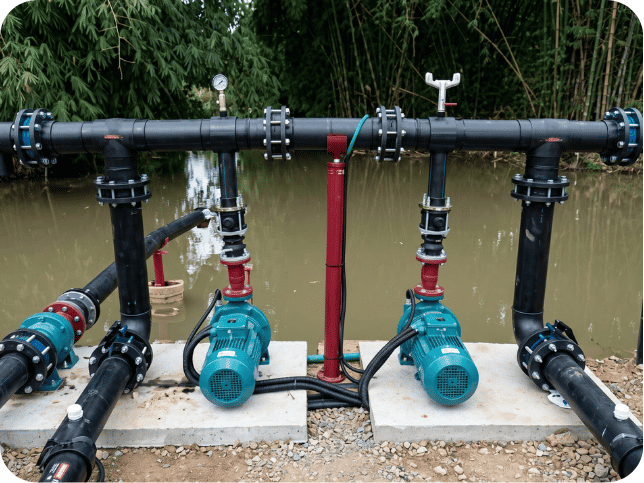
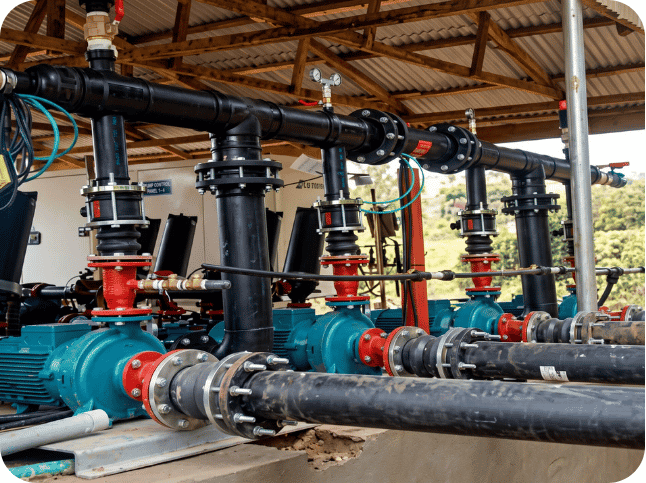
Drip irrigation delivers water and dissolved nutrients through a network of pipes and emitters directly to the base of each plant, at a controlled rate, on a programmed schedule.
Root-Zone
Delivery
Water goes exactly where the plant needs it not onto paths, not into the air, not across the surface. Up to 90% water use efficiency versus flood irrigation.
Automated
Scheduling
Irrigation runs on a timer or sensor-triggered schedule. Your crops receive consistent moisture regardless of whether your team is on-site.
Fertigation
Capability
Soluble nutrients are delivered through the same system as water directly to the root zone, at the right concentration, at the right time. Less fertiliser waste. Better uptake. Better yields.
Crops That Produce Every Month
| Crop | Cycle Time | Production Notes |
|---|---|---|
| Lettuce | 28 days | Highest volume, fastest turnover |
| Tomatoes | 60–90 days | Premium market value |
| Cucumbers | 45–60 days | Consistent supermarket demand |
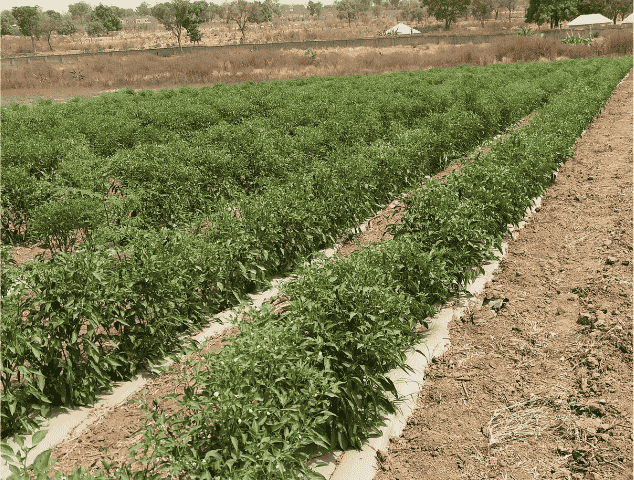
| Peppers | 60–90 days | High-value, year-round supply |
| Spinach / Herbs | 21–30 days | Institutional catering demand |
Frequently Asked Questions
Yes, in most cases. Drip irrigation is compatible with borehole, river, rainwater, and municipal water sources. We assess your water quality and pressure before design, then build in the right filtration and regulation to make your existing supply work efficiently with the system.
Drip irrigation suits a wide range; tomatoes, peppers, cucumber, watermelon, citrus, cassava, tree crops, sugarcane, and herbs. It is especially valuable for dry season farming and water-scarce regions. We configure every system to match the specific needs of your chosen crop.
Main costs include water, energy, fertilisers, and periodic maintenance. Drip irrigation uses up to 50% less water than conventional farming, reducing input waste and overall spend. Running costs are low relative to returns. We provide a full operational cost estimate as part of every system design.
Yes. We maintain local inventory of all key drip irrigation components emitters, filters, fittings, tubing, pressure regulators, and pump parts. With teams across Nigeria, you are never waiting on an international shipment. When something needs replacing, we respond quickly and keep your system running.
Yes. Every drip irrigation system we install is designed with expansion in mind; mainlines, pump capacity, and filtration are sized to accommodate future growth. Adding zones or extending coverage is straightforward when the foundation is laid correctly. We are with you from first installation to full-scale operation.